Learning Through Play: Building Early Skills in an ABA Program
Learning through play
ABA Therapy
Autism 101
Emotions
Self-care

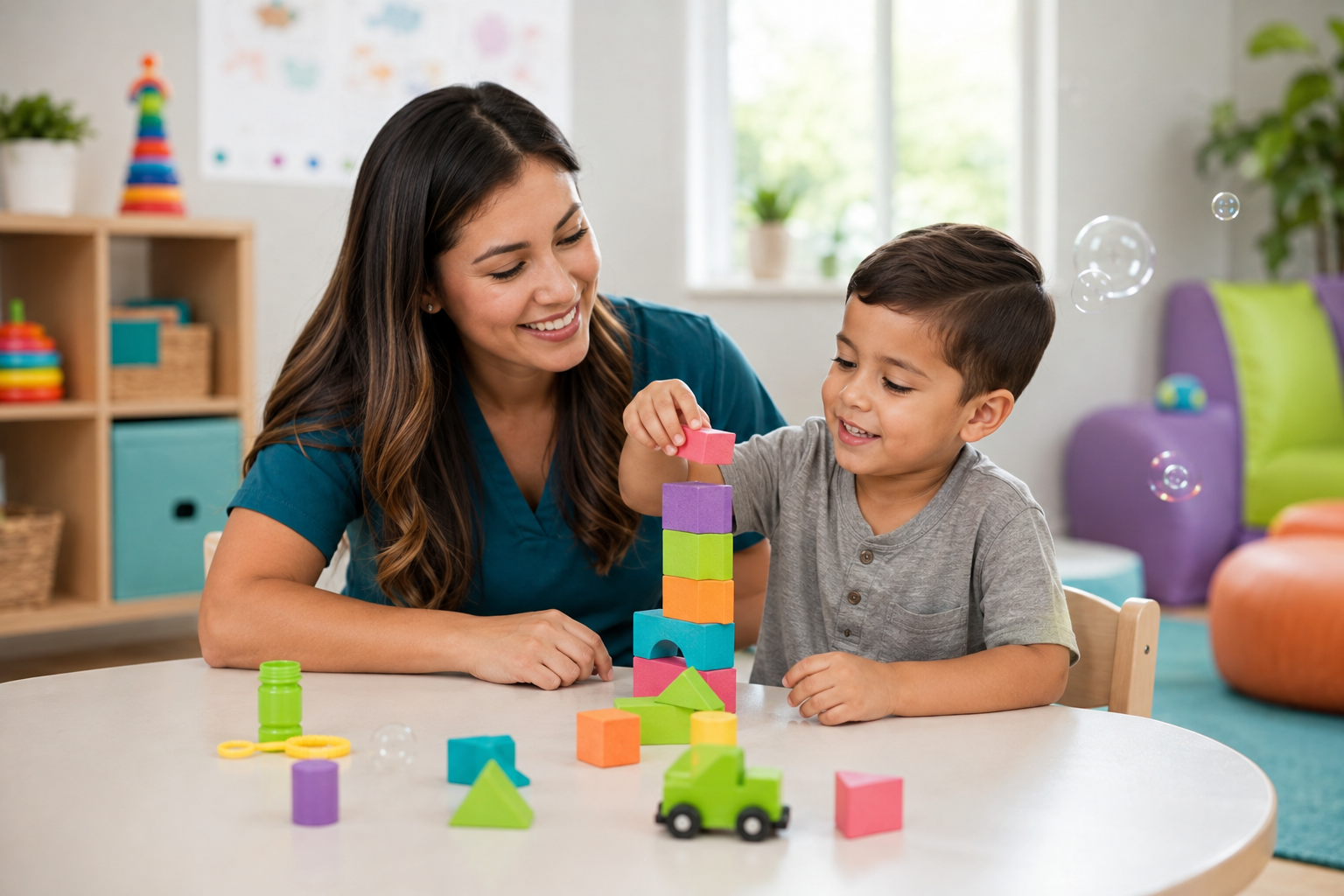
For young children, play is more than entertainment—it is one of the most natural ways to learn. Building with blocks, rolling a ball, singing songs, and pretending with toys can create valuable opportunities to develop communication, social interaction, and independence.
In center-based ABA therapy, learning can be incorporated into activities that are engaging and meaningful to each child. Therapists identify what motivates the child and use those interests to make skill-building positive and enjoyable.
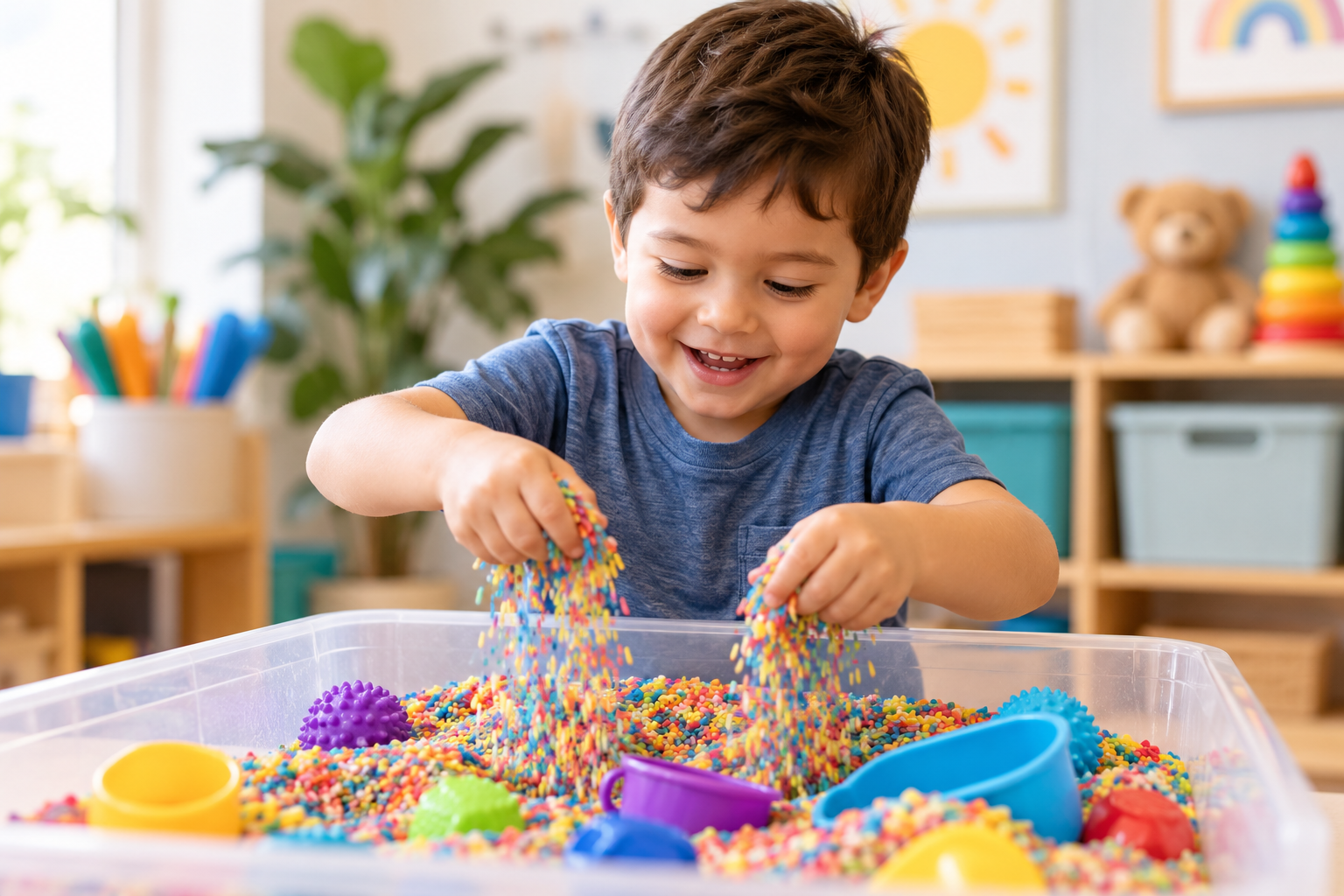
Play-based ABA therapy may look different for every child. One child might practice requesting a favorite toy, while another works on copying actions during a song. A child who enjoys cars might practice taking turns on a toy racetrack, while a child who loves bubbles might learn to ask for “more.”
Although these moments may look like simple play, they can help children build important developmental skills.
A center-based ABA program can use play to support several areas of early development.
Children can practice requesting toys, making choices, asking for help, labeling objects, or indicating when they are finished. Depending on the child’s needs, communication may include speech, gestures, pictures, or an augmentative and alternative communication (AAC) device.
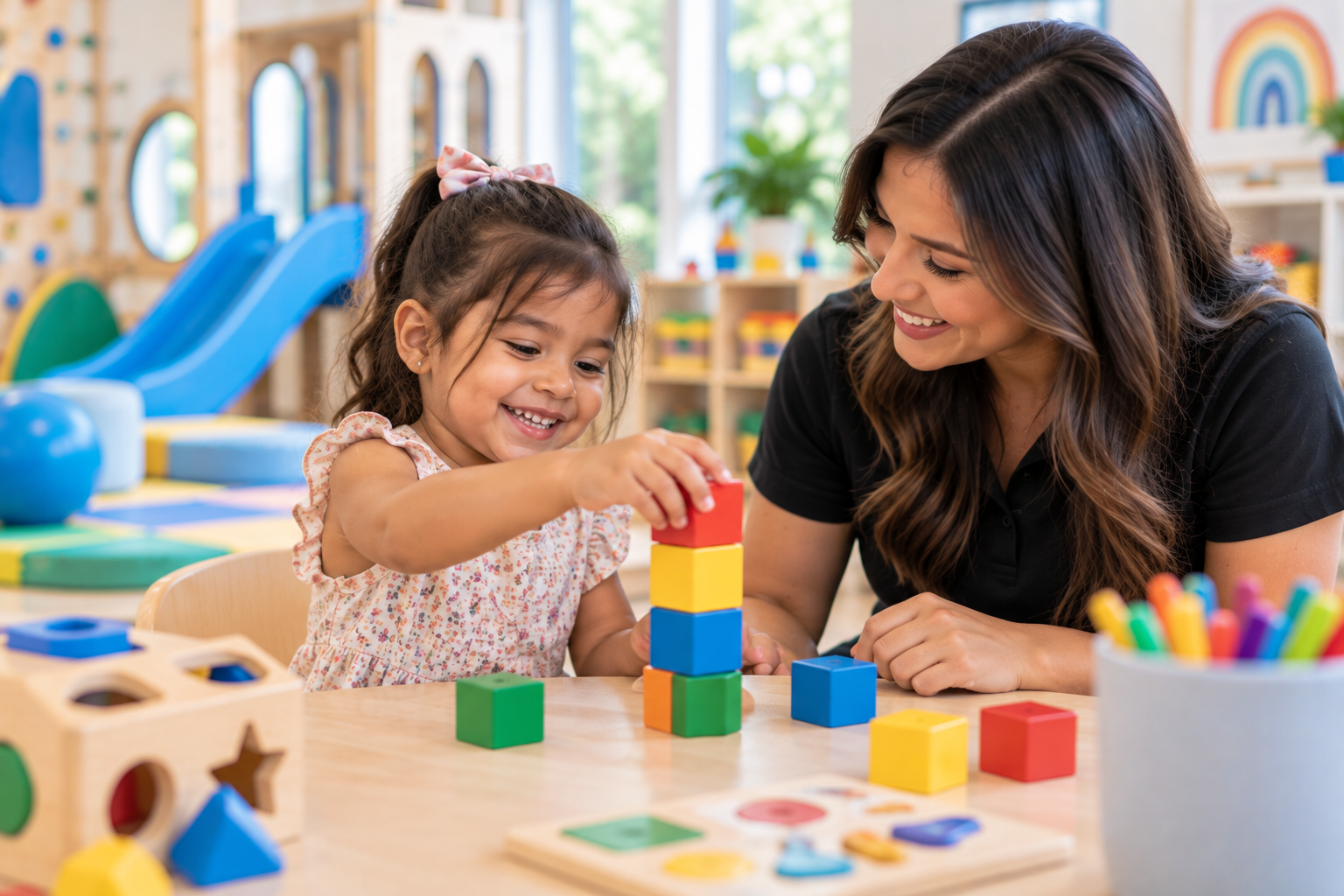
Copying actions is an important early-learning skill. Children may practice clapping, stacking blocks, making animal sounds, or repeating movements during songs.
Joint attention occurs when a child and another person focus on the same object or activity. A therapist might point to a toy, share excitement about bubbles, or encourage the child to show someone something interesting.
Rolling a ball, completing a puzzle together, or placing pieces into a game can help introduce the concepts of “my turn” and “your turn.”
Some children benefit from support as they learn new ways to engage with toys. Therapists can model actions such as pushing a toy car, feeding a doll, stacking blocks, or matching puzzle pieces.
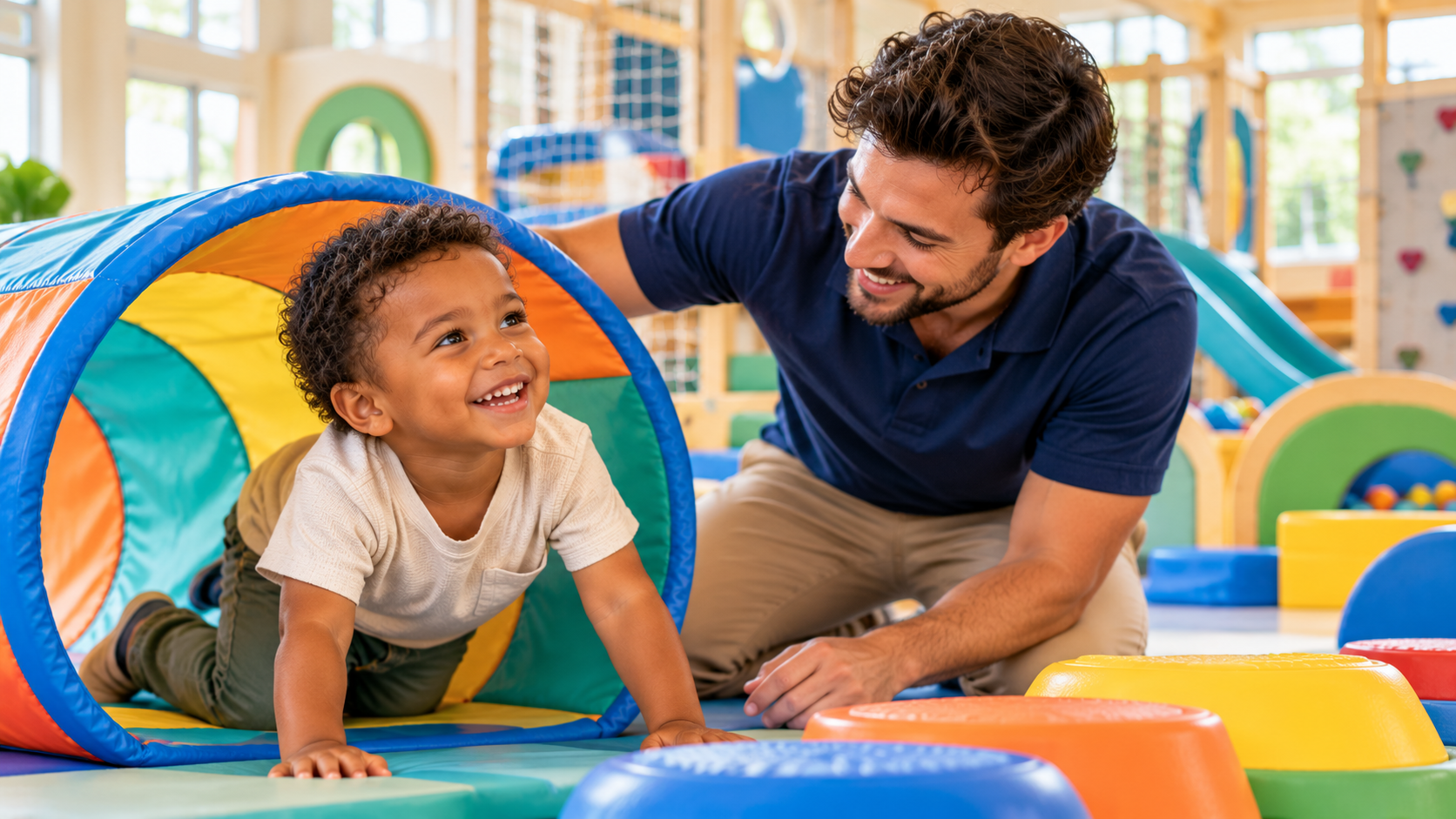
A center-based setting gives children opportunities to practice skills near and alongside their peers. Before preschool, this might include playing beside another child, participating in a short group activity, sharing materials with support, or waiting briefly for a turn.
The goal is not to force interaction. Therapists introduce social experiences gradually while respecting each child’s comfort, communication style, and developmental level.
Families can support these skills without turning playtime into a formal lesson. Try following your child’s interests and creating small, natural opportunities to communicate or interact.
For example, pause before activating a favorite toy to give your child an opportunity to request help. Take turns adding blocks to a tower. Sing a familiar song and wait to see whether your child fills in an action or sound. Celebrate participation without requiring play to look a specific way.
Some of the best learning experiences begin with connection. When children feel comfortable, supported, and engaged, they have more opportunities to practice meaningful skills.