New Routines, Growing Confidence: Helping Young Children Adjust to Change
New Routines
Emotions
Family
Mental Health
Parenting

New routines can be challenging for any young child. For children with autism, even a small
change—such as entering a new room, working with a different therapist, or moving from
playtime to snack time—may feel overwhelming.
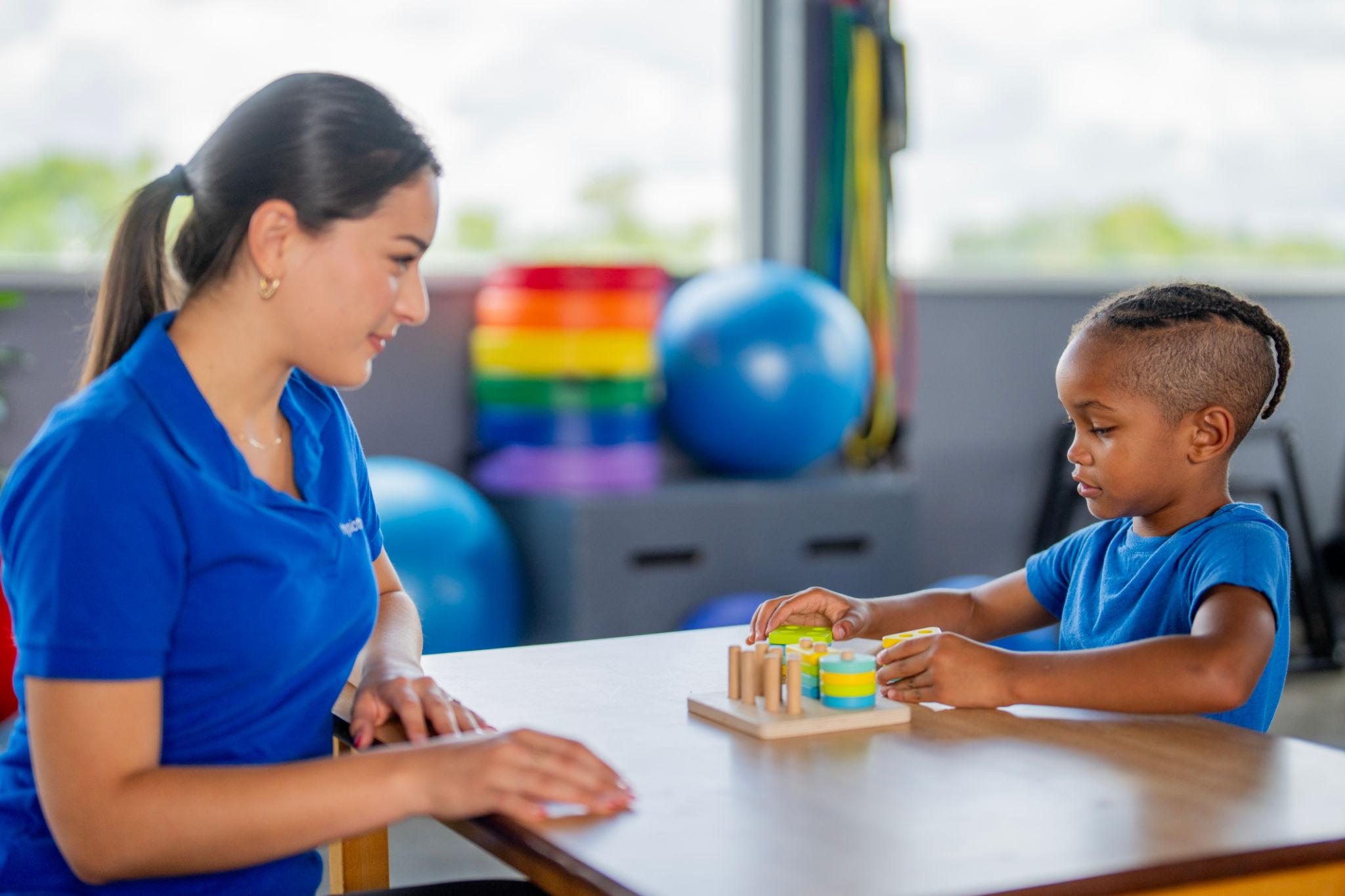
Center-based ABA therapy gives children opportunities to experience new routines in a safe,
supportive, and predictable environment. With individualized guidance and plenty of
encouragement, children can build the flexibility and confidence they will use at home, in the
community, and eventually in preschool.
Why Routines Matter
Consistent routines help young children understand what is happening and what comes next.
Predictability can make daily activities feel more manageable, especially when a child is still
developing communication and coping skills.
However, life is not always predictable. Schedules change, preferred activities end, and
unfamiliar experiences arise. ABA therapy can help children gradually learn how to handle these
moments.
Practicing Transitions Through Everyday Activities
In a center-based ABA program, transitions are built into the day. A child may move from
individual learning to playtime, from the sensory room to snack, or from a preferred activity to a
new task.
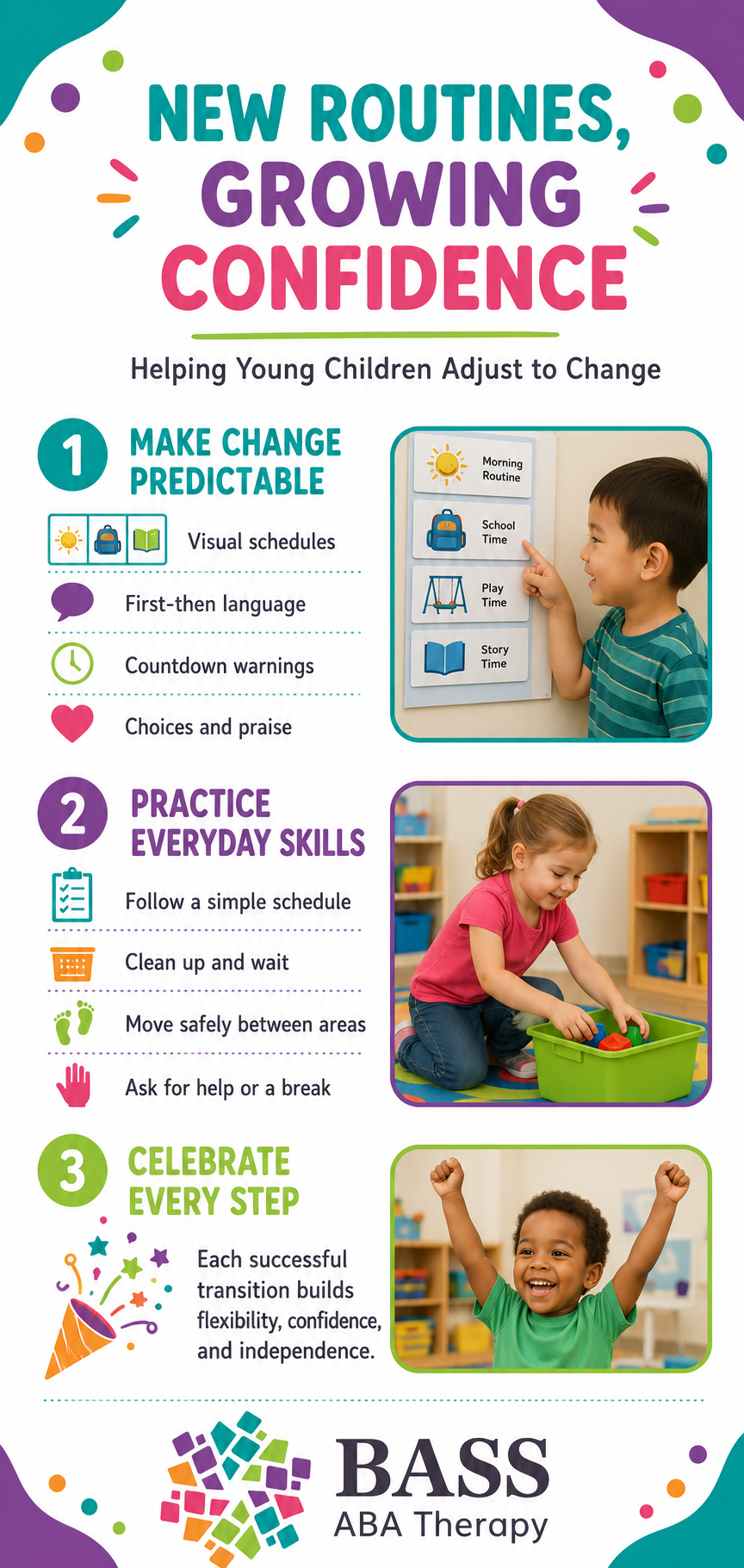
Depending on the child’s needs, therapists may use:
- Picture or visual schedules
- First-then language
- Countdown warnings
- Choices between appropriate activities
- Praise and positive reinforcement
- Gradual exposure to unfamiliar routines
These strategies help make transitions easier to understand. Over time, children can learn that
an activity ending does not mean the fun is gone—it means something new is beginning.
Building Skills Before Preschool
The years before preschool are an important time to begin practicing flexible routines. Young
children can work on skills such as:
- Entering a new environment
- Separating from a caregiver
- Following a simple daily schedule
- Cleaning up after an activity
- Waiting for a short period
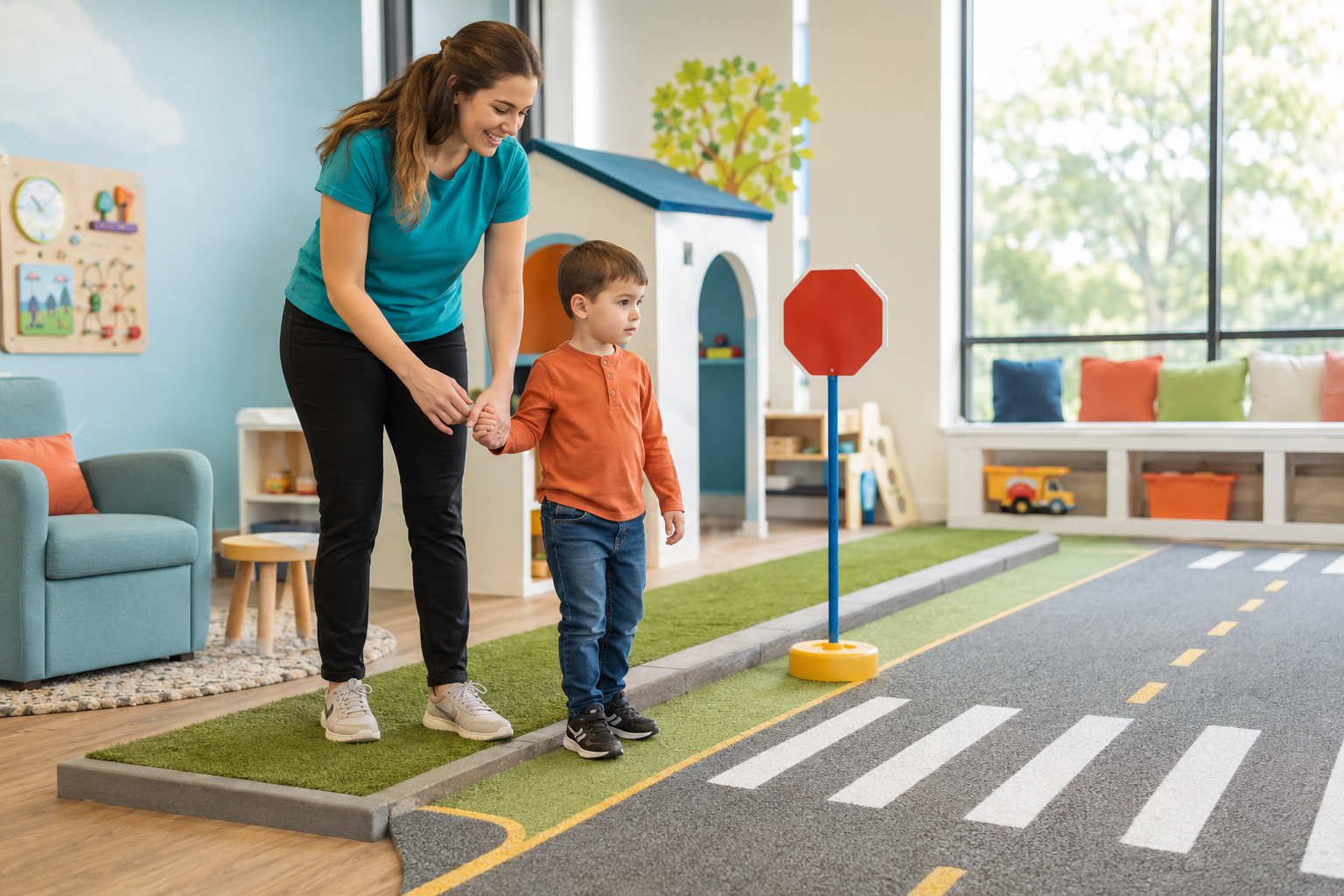
- Moving safely between areas
- Accepting small changes
- Communicating when they need help or a break
These skills are introduced at a pace that is appropriate for each child. The goal is not to expect
perfect behavior. It is to help the child feel increasingly safe, capable, and successful when
something changes.
Helping Skills Carry Over to Home
Families are an essential part of the process. Therapists can help caregivers use similar visual
supports, transition language, and reinforcement during routines at home.
Parents might work with their children to practice getting dressed, cleaning up toys, leaving the
playground, or preparing for bedtime. When children experience consistent strategies across
settings, it becomes easier for them to understand expectations and use their new skills.
Every Successful Transition Is Progress
Adjusting to change takes time. A child who looks at a visual schedule, moves to a new activity
with less support, or communicates a need for a break is making meaningful progress.
At BASS ABA Therapy, our center-based ABA therapy programs provide supportive
opportunities for young children to practice routines, communication, play, and early learning
skills before they enter preschool. Contact our team to learn how an individualized ABA program
supports your child and family.