Wandering prevention, swim readiness, sensory-friendly swim gear, and visual supports
Warm weather often brings families to pools, beaches, and lakes, but for parents of young children with autism, these environments can feel both exciting and overwhelming. Water play can be joyful and regulating, yet it also introduces serious safety concerns, especially for children who may be drawn to water, have limited safety awareness, or struggle with impulse control.
The goal isn’t to avoid water activities, it’s to make them safer, more predictable, and more supportive of your child’s needs. Below are practical, realistic strategies to help your child enjoy water play while reducing risk and stress for the whole family.
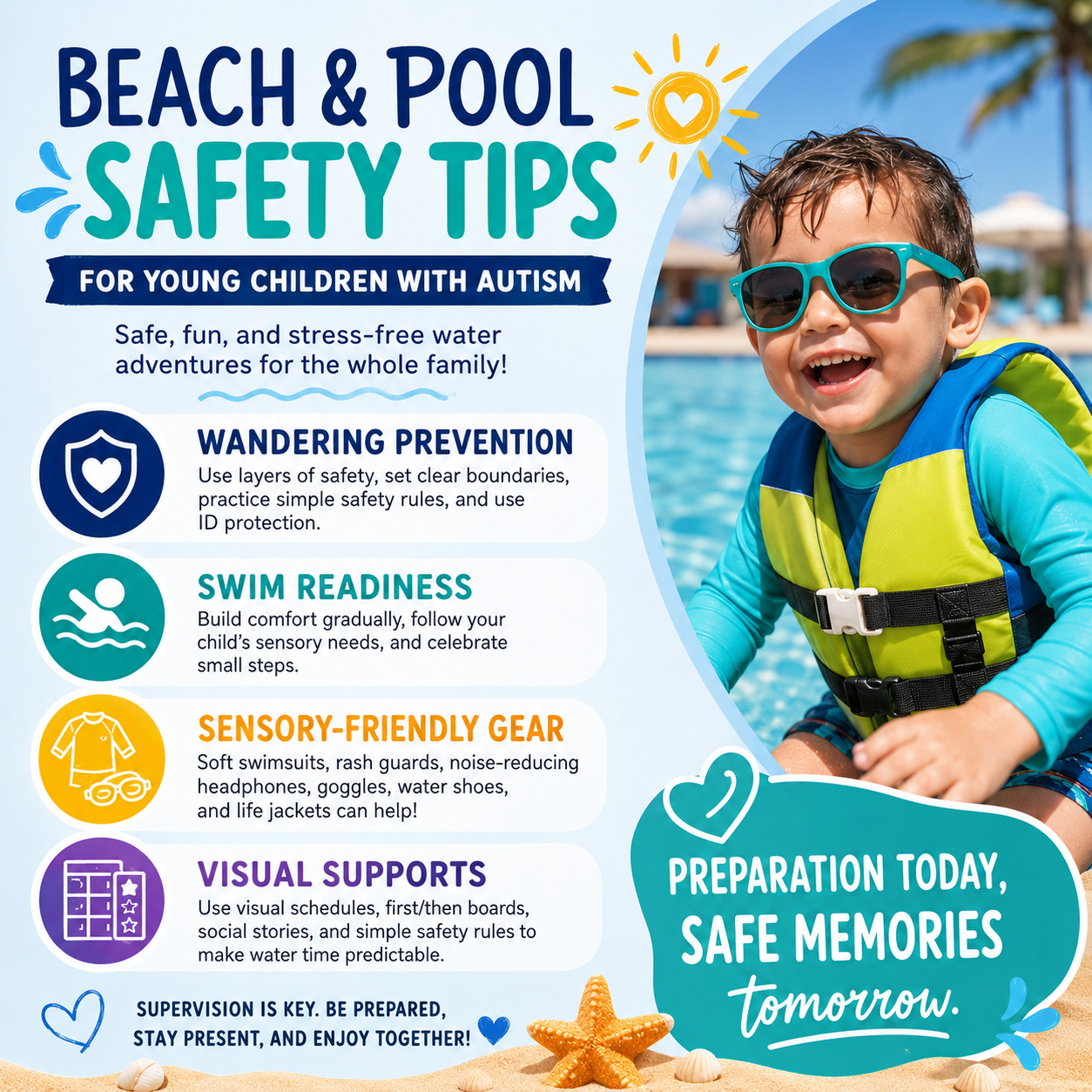
1. Wandering Prevention: Safety Starts Before You Arrive
Wandering, or elopement, is one of the most significant safety concerns for many families of children with autism. Beaches and pools add extra risk due to open space, distractions, and water attraction.
Practical strategies:
- Use a “layers of safety” approach
Rely on more than one safeguard at a time (not just supervision).- Physical hand-holding in crowded areas
- Coast guard–approved life vest near water
- Wrist link or safety harness if appropriate
- Bright, easily visible clothing or swimwear
- Set a clear “safety boundary”
Use visual markers like:- A towel line (“We stay behind the towel”)
- A pop-up tent or umbrella as a home base
- A designated “safe zone” for breaks
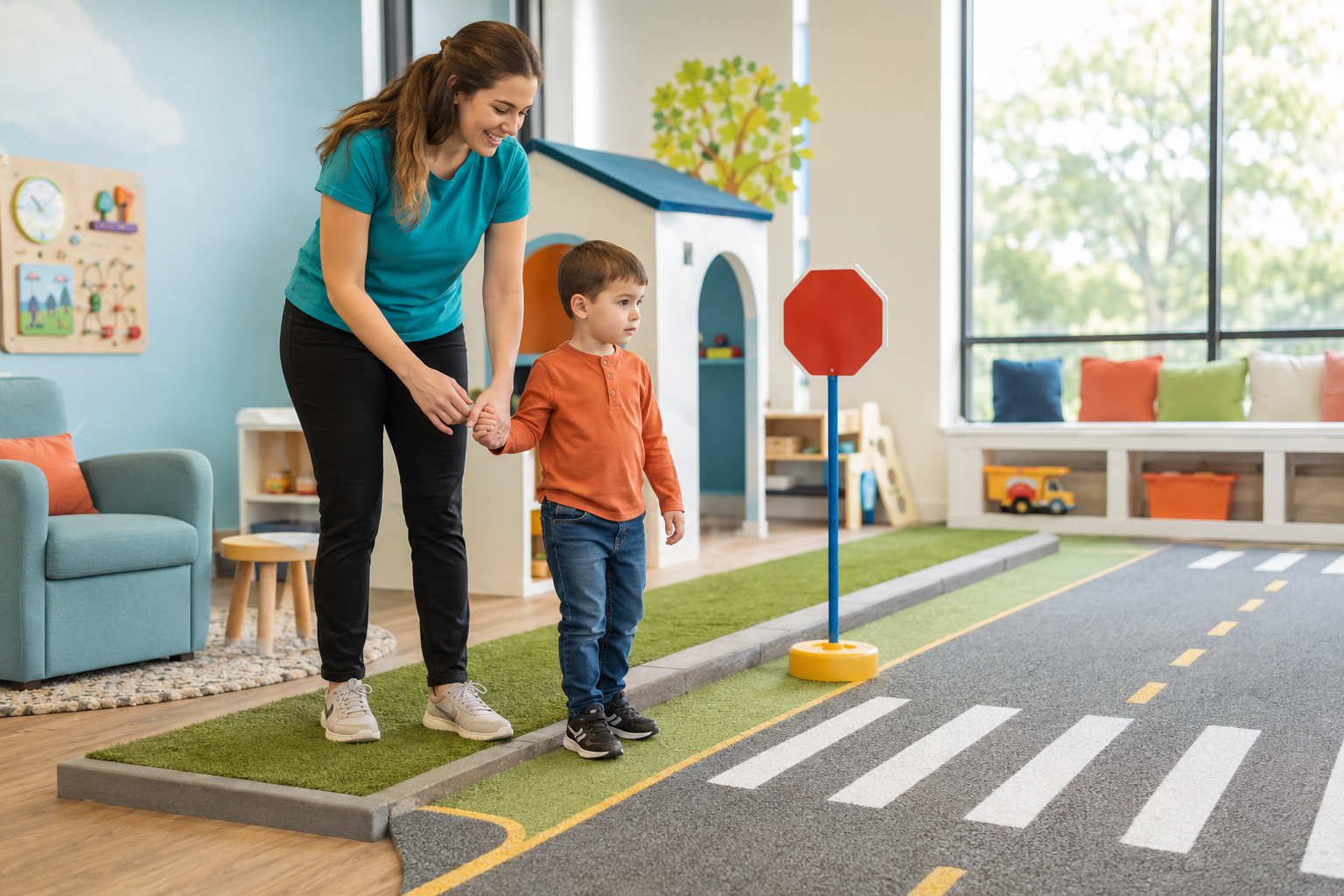
- Practice a simple safety rule before you go
Keep it short and consistent:- “Stop means stop.”
- “Wait for grown-up.”
- “Water only with me.”
- Use ID protection
Consider:- Waterproof ID bracelet
- Temporary tattoos with contact info
- Written contact card in swim bag
2. Swim Readiness: Building Comfort and Confidence in Water
Not every child is ready to jump into a pool or ocean right away, and that’s okay. Swim readiness is about gradual exposure and emotional safety.
Start small:
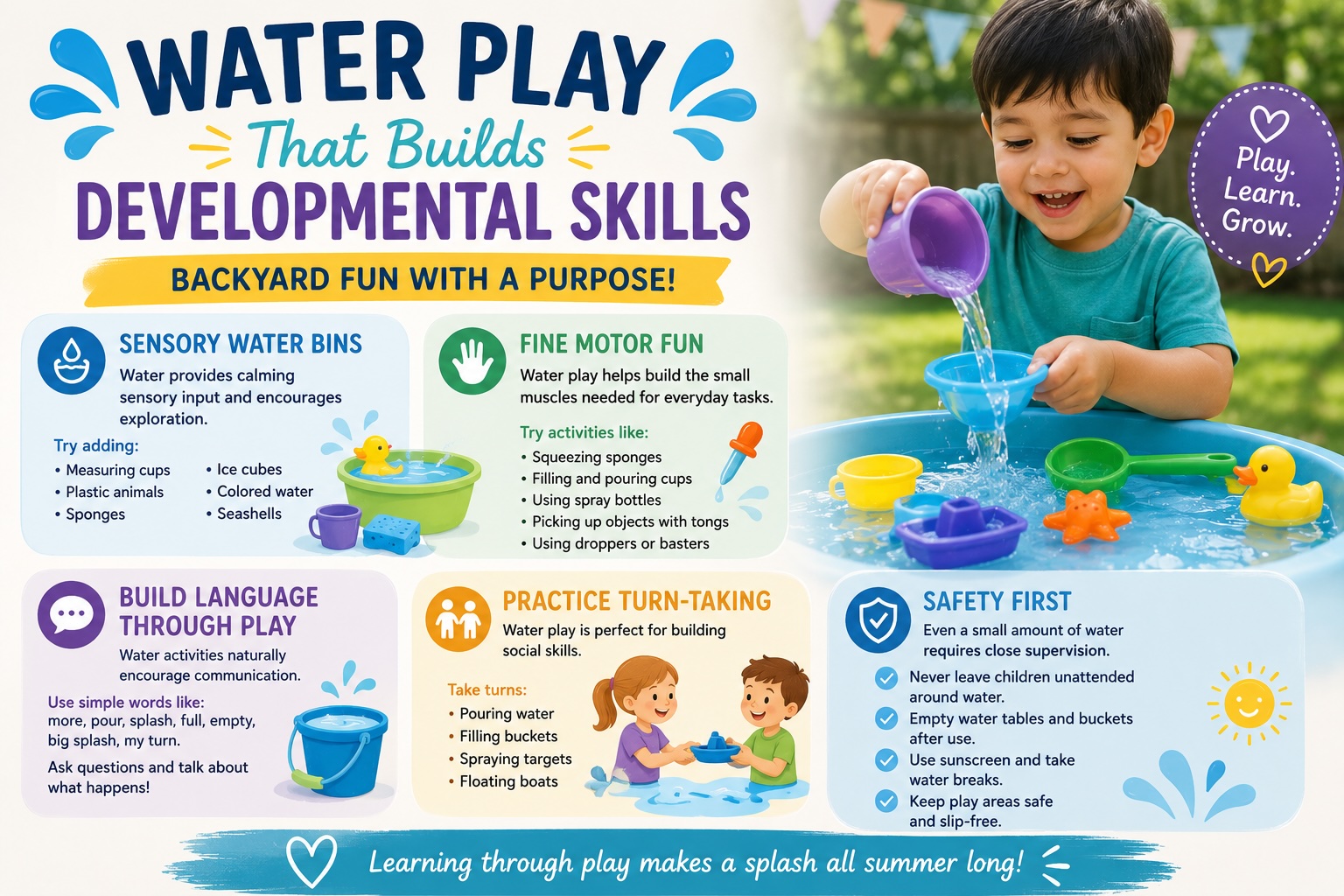
- Begin with bath time play (pouring cups, toys, splashing)
- Progress to shallow water play (ankle-deep pools or splash pads)
- Allow your child to observe before participating
Follow their sensory comfort:
Some children love water pressure and movement, while others may be sensitive to:
- Temperature changes
- Echoes and noise
- Wet clothing or splashing
Never force immersion. Instead, build trust slowly through predictable exposure.
Use modeling:
- Show swimming or water play yourself
- Use sibling or peer modeling when possible
- Watch short videos of safe pool routines before visits
3. Sensory-Friendly Swim Gear That Can Make a Big Difference
For many children with autism, sensory comfort is the difference between enjoying water play and feeling overwhelmed.
Helpful options to try:
- Seamless or soft-lined swimsuits to reduce irritation
- Rash guards for compression and temperature regulation
- Noise-reducing swim headphones for busy pools or beaches
- Sunglasses or swim goggles to reduce visual overload
- Water shoes for sand, rocks, or textured pool surfaces
- Swim caps for children sensitive to wet hair
Life jackets and flotation support:
Choose a properly fitted, Coast Guard–approved life jacket. Some children may resist at first, so allow:
- Gradual wearing time at home
- Positive pairing (snacks, play, praise)
- Choice between colors or styles when possible
4. Visual Supports: Making Water Time Predictable
Children with autism often feel more secure when they know what to expect. Visual supports reduce anxiety and help transitions go more smoothly.
Try these tools:
Visual schedule
Use pictures or simple icons to show:
- Arrive, change, water play, break, leave
First/Then board
- “First swim, then snack”
- “First sunscreen, then pool”
Social stories
Create a short story with pictures explaining:
- Where you’re going
- What water rules are
- How to stay safe
- What happens when it’s time to leave
Visual safety rules
Keep it simple:
- “Stop”
- “Stay with grown-up”
- “Feet stay in shallow water”
5. Managing Transitions: Leaving the Water Without Meltdowns
One of the hardest parts of pool or beach time is leaving.
Strategies that help:
- Give 5-minute and 2-minute warnings
- Use a timer or sand timer
- Offer a predictable reward afterward (snack, car toy, preferred activity)
- Build a consistent phrase:
- “Water all done, then snack in the car.”
Consistency matters more than negotiation in the moment.
6. Safety Reminders That Matter Most
Even with all the tools in place, supervision is still the most critical layer of protection.
- Stay within arm’s reach near water
- Avoid distractions like phones
- Assign a “water watcher” if multiple adults are present
- Know your child’s specific risk patterns (drawn to water, bolting, sensory seeking)
Final Thoughts
Beach and pool days don’t have to be stressful or off-limits. With preparation, structure, and sensory awareness, they can become meaningful experiences that support regulation, play, and family connection.
The key is not perfection, it’s preparation, predictability, and presence.