Understanding Big Emotions in Preschoolers with Autism: Helping Children Identify and Express Feelings
Understanding Emotions
ABA Therapy
Autism 101
Emotions
Family
Parenting

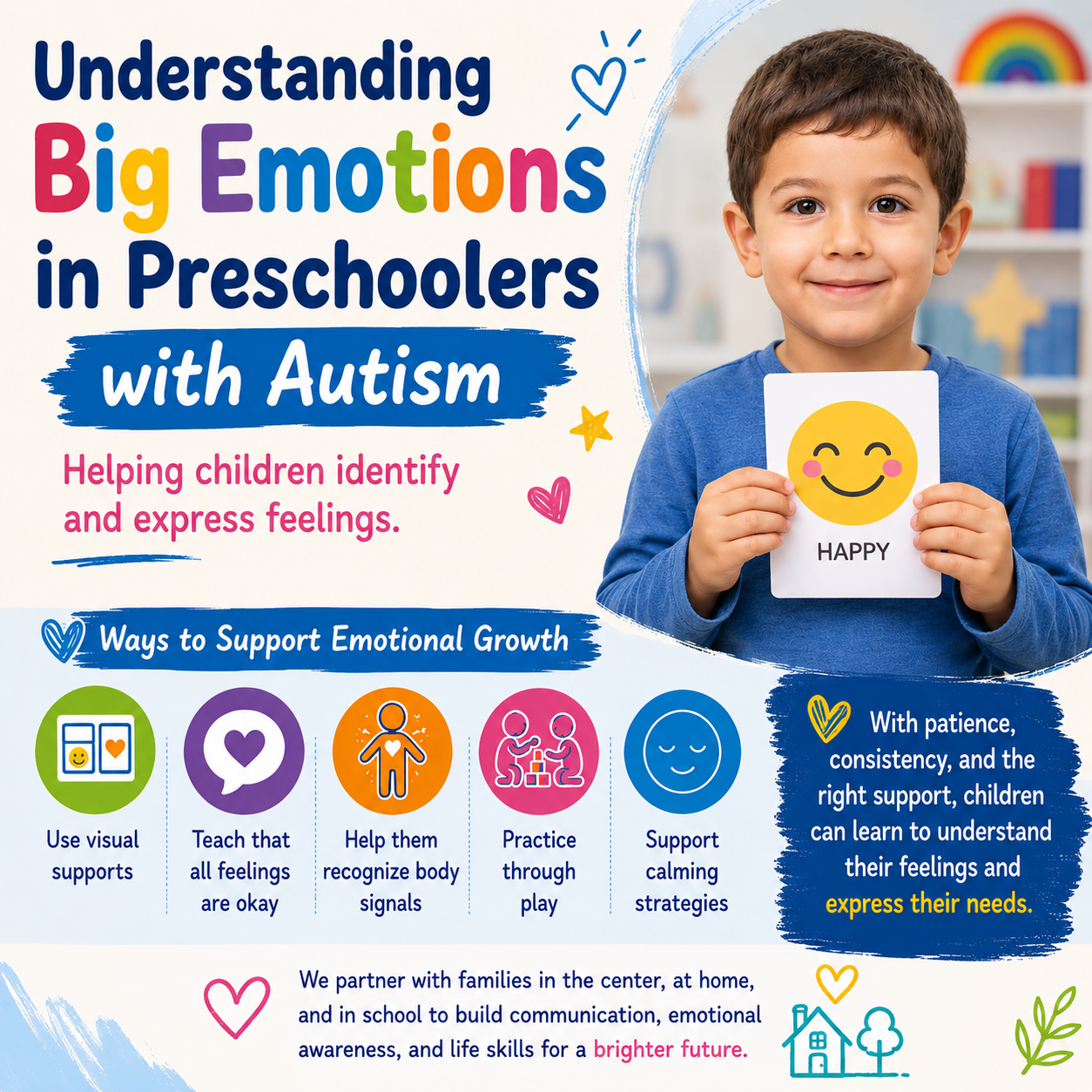
Preschoolers experience a wide range of emotions, but for children with autism, recognizing, understanding, and expressing those feelings can be especially challenging. Big emotions like excitement, frustration, disappointment, or anxiety may seem overwhelming and can sometimes lead to meltdowns, withdrawal, or behaviors that are difficult for others to understand.
The good news is that emotional awareness is a skill that can be taught. With patience, consistency, and the right support, children can learn to identify their feelings and communicate their needs in ways that help them thrive.
Young children with autism often experience emotions just as deeply as their peers, but they may have difficulty:
When a child cannot communicate how they feel, behaviors such as crying, hitting, withdrawing, or refusing tasks may be their way of saying, "I'm frustrated," "I'm scared," or "I need help."
Teaching emotions begins with the basics. Focus on a few common feelings first:
Use everyday moments to label emotions:
Repeatedly hearing emotions named helps children begin connecting feelings with words.
Many children with autism are visual learners. Pictures and visual tools can make abstract emotions easier to understand.
Helpful tools include:
Visual supports give children a way to communicate even before they have the words to explain how they feel.
Children need to know that emotions themselves are never "bad." Instead, they can learn appropriate ways to express those feelings.
For example:
What matters is learning safe and healthy ways to communicate those emotions.
You might say:
"It's okay to be upset. Let's use our words or show me with your feelings chart."
Emotions often show up in the body before children can identify them with words. Helping preschoolers notice these signals can build self-awareness.
Examples include:
By connecting physical sensations with emotions, children can begin recognizing how they feel before emotions become overwhelming.
Play is one of the best ways to teach emotional skills.
Try:
Keeping learning fun and engaging makes it easier for children to absorb these concepts.
Once children can recognize emotions, they can begin learning how to communicate them.
Some children may use:
Simple phrases like:
can empower children to express themselves before frustration escalates.
Young children need help learning how to calm their bodies when emotions become too big.
Strategies may include:
Every child is different, and finding what works best often takes time and practice.
Learning emotional awareness doesn't happen overnight. A child pointing to a "sad" picture, asking for help instead of crying, or identifying that they feel frustrated are all important milestones worth celebrating.
Progress may come one small step at a time, but each step builds confidence, communication, and stronger connections with others.
Helping preschoolers with autism understand and express their emotions gives them tools they can use throughout their lives. Through play, visual supports, and consistent encouragement, children can learn that their feelings matter and that there are many ways to share them.
At BASS ABA Therapy, we meet children where they are and use individualized, play-based approaches to help build communication, emotional awareness, and meaningful life skills. Whether therapy takes place in one of our thoughtfully designed centers, at home, or in school, we partner with families to support each child's unique journey toward growth and confidence.