From Parallel Play to Peer Interaction: Supporting Preschool Social Growth
Social Growth
Emotions
Family
Family Fun
Parenting


Preschool is an exciting time filled with discovery, imagination, and new friendships. For young children, play is more than just fun; it is one of the most important ways they learn to communicate, cooperate, and connect with others.
Many parents notice that young children often play next to other kids before they truly begin playing with them. This stage, known as parallel play, is a normal and important step in social development. Over time, children gradually learn how to interact more directly with peers, share ideas, and participate in cooperative play.
For children with Autism Spectrum Disorder, developing these social skills may take additional support and practice. With encouragement and structured opportunities, families and educators can help children build the confidence needed to engage with others.
Parallel play typically occurs in toddlers and young preschoolers. During this stage, children play near one another but focus on their own activities rather than interacting directly.
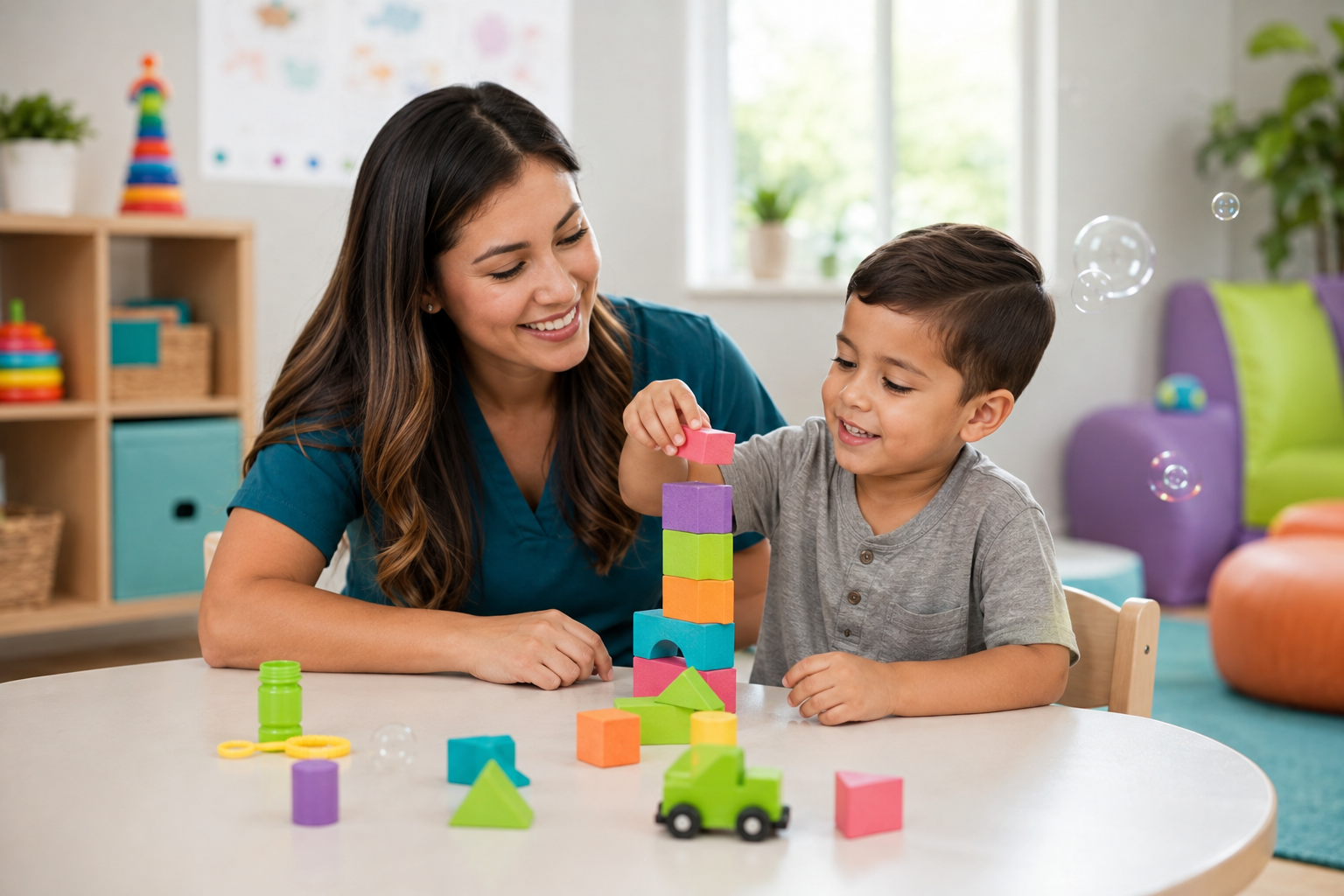
For example, two children might sit side by side, building with blocks or playing with toy cars without talking or sharing materials.
Although it may not look like social interaction yet, parallel play is actually an important developmental step. Children are learning to:
These experiences lay the groundwork for more interactive play later on.
As children grow, they begin to show interest in what other children are doing. This often leads to more interactive forms of play, such as:
Associative play:
Children play with similar toys or activities and may occasionally talk or share materials.
Cooperative play:
Children begin working together toward a shared goal, such as building a structure, playing pretend games, or taking turns in a game.
These interactions help children develop important life skills, including communication, problem-solving, and teamwork.
For some children, especially those with developmental differences, social interaction can feel confusing or overwhelming.
They may struggle with:
These challenges don’t mean a child isn’t interested in friendships; it may simply mean they need more guidance and opportunities to practice social skills.
Parents and caregivers can help children move from parallel play toward more interactive play by creating supportive and structured opportunities.
1. Arrange small play opportunities
Start with one peer at a time rather than large groups. Smaller settings can feel less overwhelming and allow children to focus on practicing interaction.
2. Choose activities that encourage cooperation
Simple games like building a tower together, rolling a ball back and forth, or completing a puzzle as a team encourage shared participation.
3. Model social language
Adults can demonstrate phrases children can use during play, such as “Can I play?” or “Your turn.”
4. Encourage turn-taking
Games with clear turns help children understand the back-and-forth rhythm of social interaction.
5. Celebrate positive interactions
Recognizing and praising successful interactions can help children feel proud and motivated to continue engaging with peers.
Some children benefit from structured support to help develop social and communication skills. Approaches like Applied Behavior Analysis (ABA) therapy can help children practice social behaviors in manageable steps.
Therapists often focus on skills such as:
These skills can then be practiced in real-world environments such as preschool classrooms, playgrounds, and family gatherings.
It’s important to remember that social development is a journey. Some children naturally jump into group play, while others take more time to feel comfortable interacting with peers.
With supportive guidance, patience, and opportunities to practice, children can gradually move from playing side by side to forming meaningful connections with others.
Those early friendships, shared games, and moments of laughter are more than just childhood memories—they are the building blocks of communication, empathy, and lifelong social skills.