Questions to Ask Your Therapy Team Before Summer Begins: Maintaining Progress Through Routine Changes
Questions to Ask for Summer
Autism 101
Family
Mental Health
Parenting

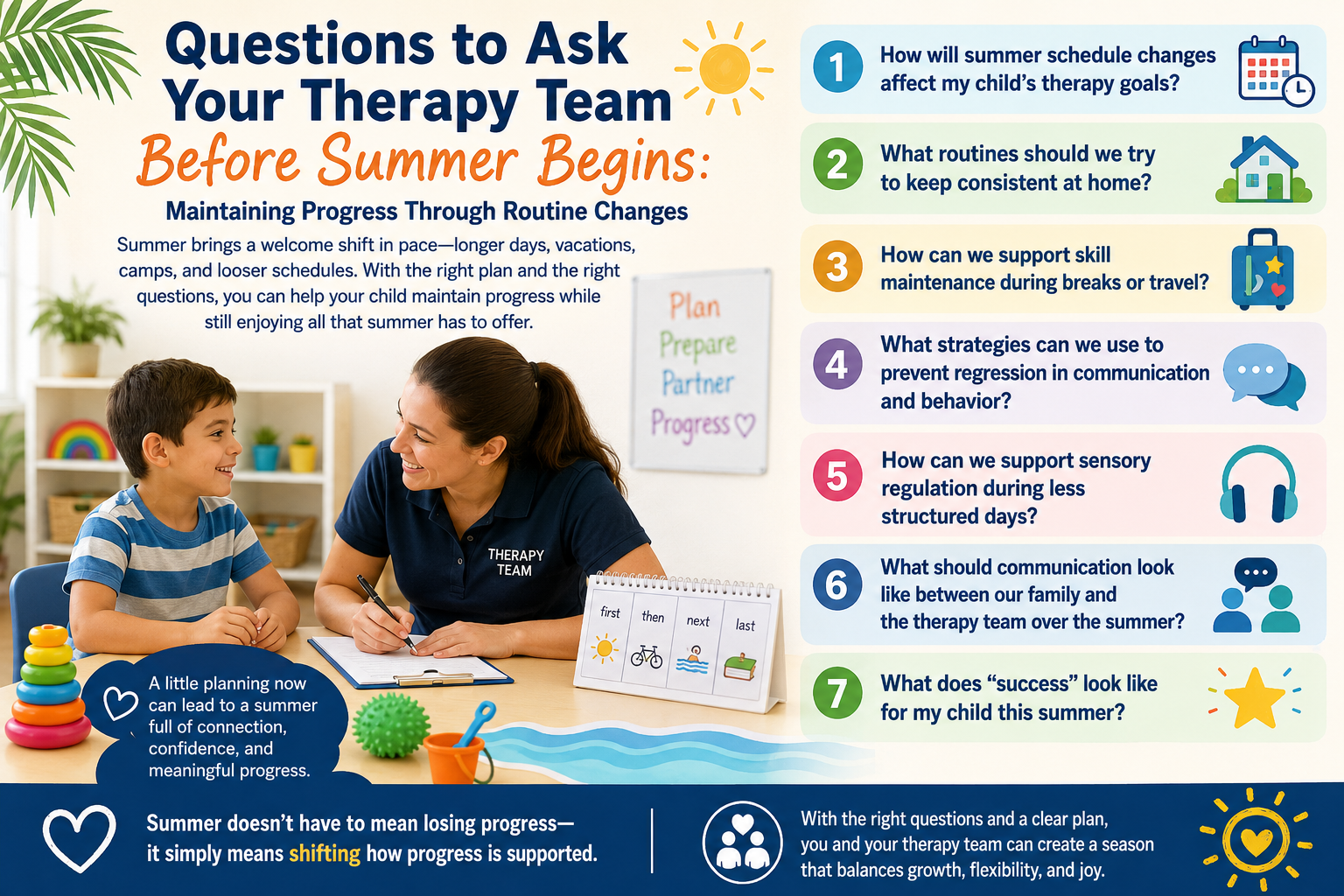
Summer brings a welcome shift in pace—longer days, vacations, camps, and looser schedules. For many families of young children receiving therapy services, especially those in ABA, speech, or occupational therapy, this transition can also bring uncertainty. Changes in routine can impact progress, behavior, and consistency in skill-building.
The good news: a proactive conversation with your therapy team can make a big difference. By planning ahead, you can help your child maintain progress while still enjoying the flexibility and fun that summer offers.
Here are key questions to ask your therapy team before summer begins.
Summer often means reduced hours, inconsistent attendance, or changes in environment. Ask your team:
This helps you and your providers align expectations and focus on what matters most right now—maintenance, consistency, and real-world application.
Children with autism often thrive with predictability. Even if your daily schedule shifts, consistency in a few key areas can help anchor the day.
Ask your therapy team:
Small consistencies, like a predictable morning sequence or bedtime routine, can help reduce dysregulation during more flexible days.
Breaks in services don’t have to mean skill regression. Your team can help you build a light, manageable plan.
Ask:
The goal is not to replicate therapy sessions, but to embed learning into everyday summer moments—like snack time, car rides, or outdoor play.
Transitions can sometimes lead to increased behaviors or reduced communication as routines shift. Your team can help you prepare.
Ask:
Having a shared plan reduces stress for both caregivers and children when challenges arise.
Summer often brings more stimulation—travel, crowds, noise, and changes in environment.
Ask your therapy team:
Common supports may include headphones, weighted items, movement breaks, or planned quiet time during the day.
Consistency doesn’t just happen in sessions—it also comes from communication.
Ask:
Even brief, consistent communication can help prevent small challenges from becoming larger setbacks.
This may be the most important question of all.
Success in summer often looks different than during the school year or structured therapy blocks. It may mean:
Ask your team to help define realistic, meaningful goals for this season so expectations stay grounded and supportive.
Summer doesn’t have to mean losing progress—it simply means shifting how progress is supported. With the right questions and a clear plan, families and therapy teams can work together to create a season that balances growth, flexibility, and joy.
You don’t need a perfect summer schedule. You just need a thoughtful one that fits your child, your family, and your real life.