Understanding Challenging Behaviors as Communication
Understanding Challenging Behaviors
Autism 101
Emotions
Family
Mental Health
Parenting

When young children struggle to communicate, their behavior often speaks for them. For children with autism, especially under the age of 6, challenging behaviors are rarely random or intentional. More often, they are a form of communication.
Understanding behavior as communication can be a powerful shift for families. It replaces frustration with curiosity and helps parents better support their child’s needs.
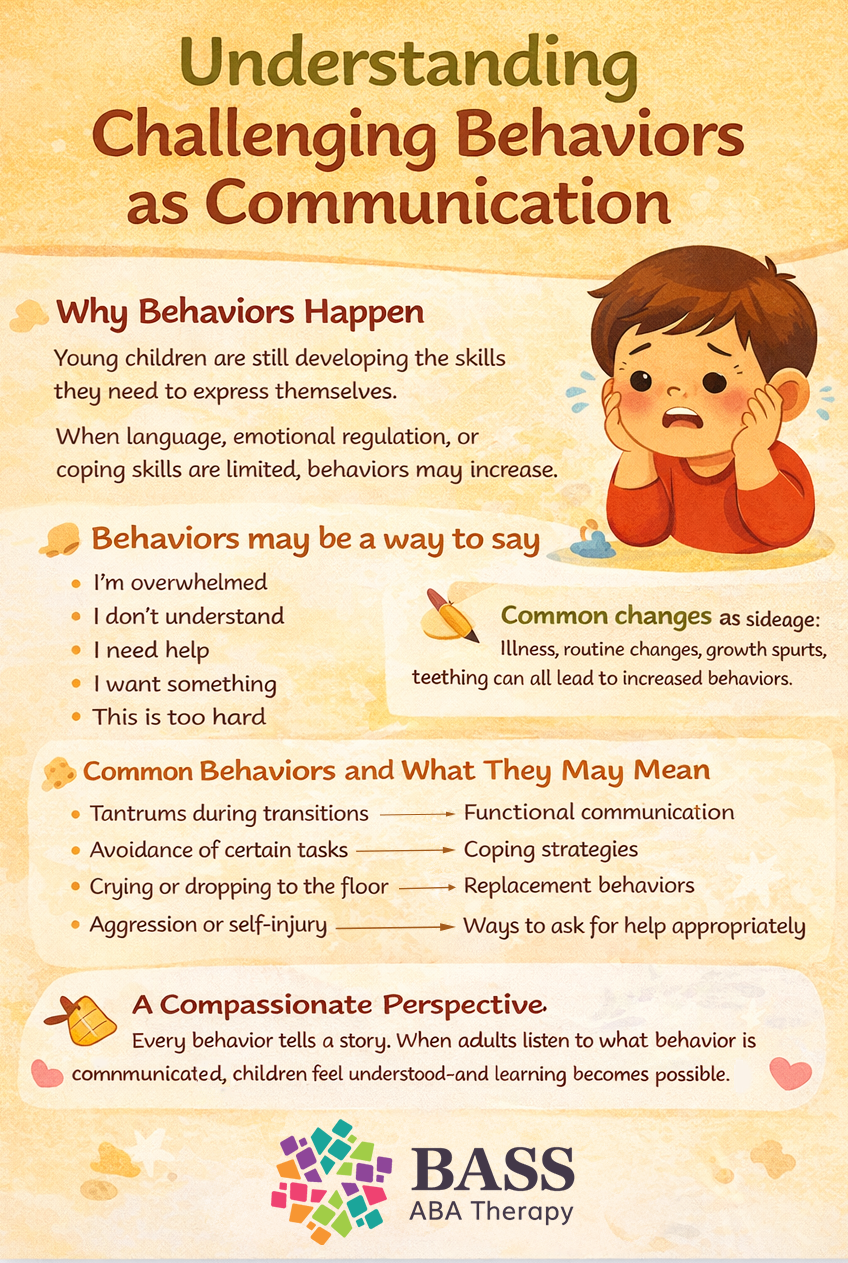
Young children are still developing the skills they need to express themselves. When language, emotional regulation, or coping skills are limited, behaviors may increase.
Behaviors may be a way to say:
Recognizing this helps parents respond with support rather than punishment.
Some behaviors often seen in young children with autism include:
These behaviors can be linked to sensory overload, communication difficulties, fatigue, or changes in routine.
ABA therapy focuses on understanding why a behavior occurs, not just stopping it. Therapists look at patterns, triggers, and what the child gains from the behavior.
Through ABA, children are taught:
This allows children to meet their needs in more effective ways.
Parents can support this process by:
Progress takes time, but understanding behavior as communication builds trust and connection.
Every behavior tells a story. When adults listen to what behavior is communicating, children feel understood, and learning becomes possible.