Valentine’s Day Without the Pressure: Supporting Sensory & Emotional Needs
No pessure Valentines Day
ABA Therapy
Autism 101
Family
Family Fun
Parenting

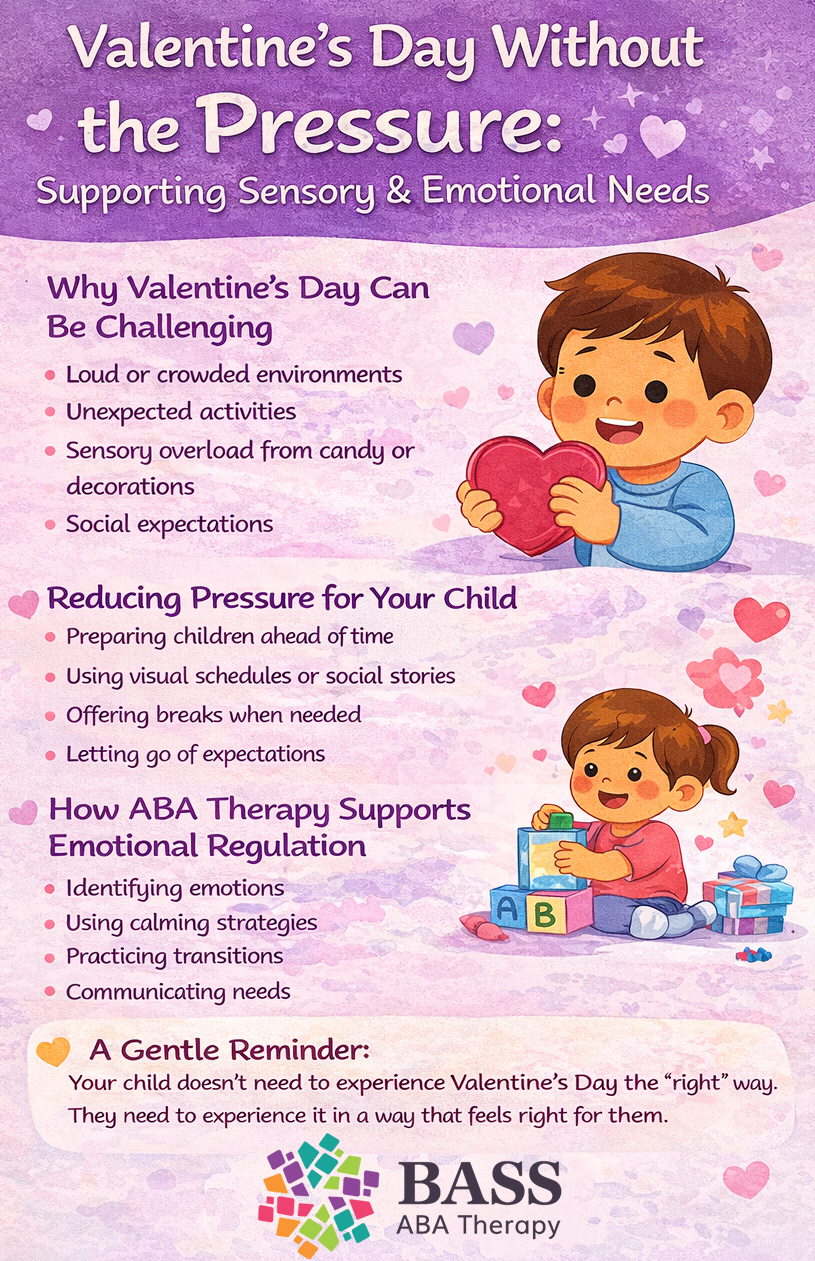
Valentine’s Day can be fun, but for young children with autism, it can also be overwhelming. Classroom parties, candy, cards, and schedule changes may increase sensory and emotional stress.
Valentine’s Day doesn’t have to be perfect to be meaningful.
Common challenges include:
These experiences can be particularly challenging for children under the age of 6.
Parents can help by:
Participation doesn’t need to look the same for every child.
ABA therapy helps children learn skills to manage new or overwhelming experiences, including:
These skills are especially helpful during busy holidays.
Connection doesn’t require cards or parties. It can be:
What matters most is emotional safety and connection.
Your child doesn’t need to experience Valentine’s Day the “right” way. They need to experience it in a way that feels right for them.