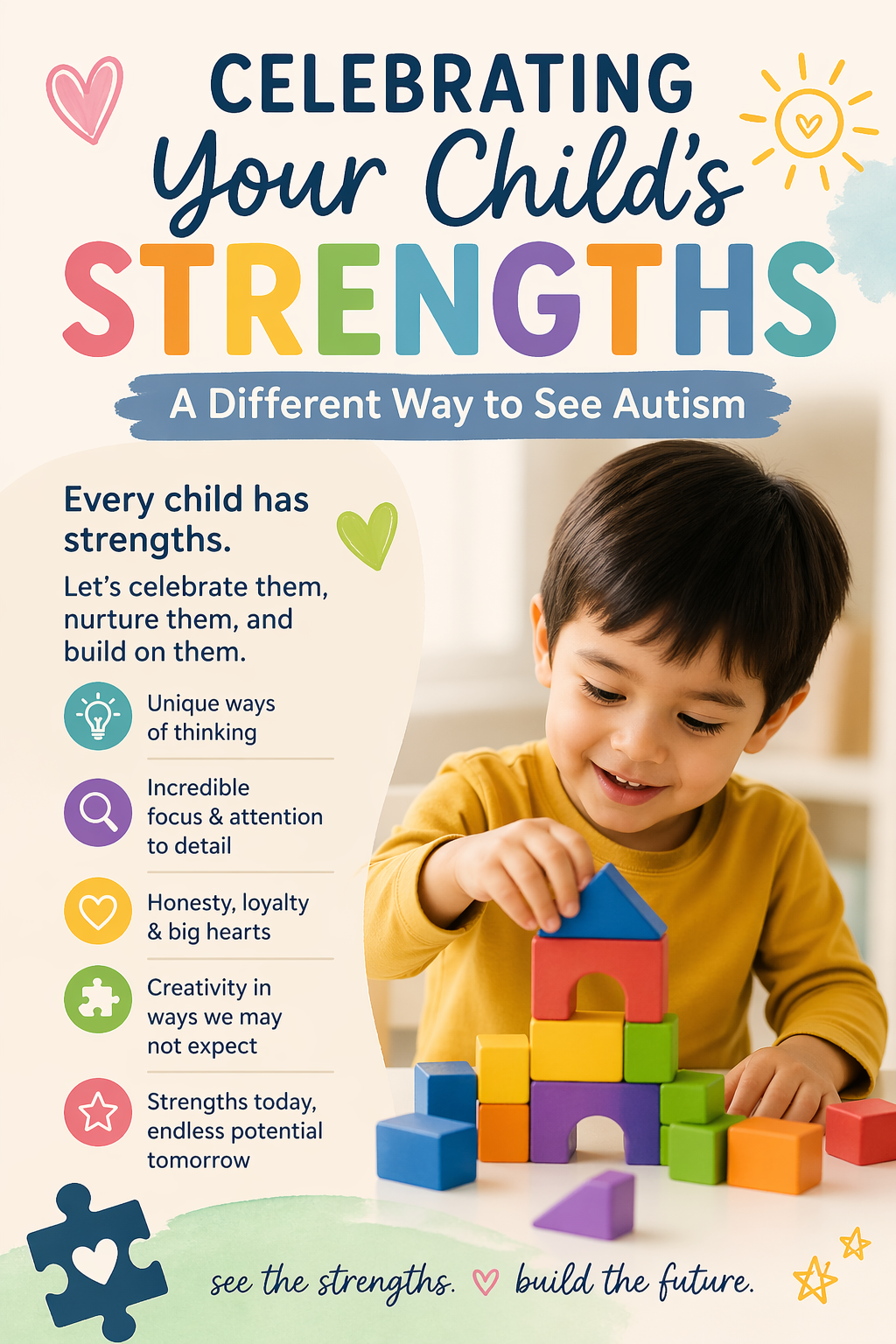
Celebrating Your Child’s Strengths: A Different Way to See Autism
stregths
ABA Therapy
Autism 101
Emotions
Family
Mental Health
Parenting

When your child is first diagnosed with autism, it’s natural for the focus to land on challenges—communication delays, behavior concerns, or developmental milestones that feel out of reach. You may hear a lot about what your child needs to work on.
But there’s another side of the story, one that deserves just as much attention.
Your child has strengths. Real, meaningful, important strengths. And learning to recognize and nurture them can change not only how you see your child, but how your child begins to see themselves.
It’s easy to fall into a checklist mindset: What skills are missing? What needs to improve? What should we fix next?
While support and intervention are important, focusing only on deficits can unintentionally overshadow who your child already is.
A strength-based approach asks a different question:
What is my child already showing me and how can I build on it?
This shift doesn’t ignore challenges. It simply creates balance. It allows space for growth and appreciation at the same time.
Strengths in young children with autism don’t always look the way people expect, but they are there.
You might notice:
Some children show early strengths in problem-solving, memory, music, or technology. Others shine in quieter ways like persistence, independence, or a strong connection with familiar people.
These strengths are not “side notes.” They are powerful tools for learning.
When children feel successful, they are more likely to:
For young children with autism, this is especially important. Learning can feel hard. The world can feel unpredictable. Strengths provide a starting point.
When we teach through what a child enjoys or does well, we’re not just teaching skills, we’re building trust.
You don’t need a complicated plan to start using a strength-based approach. Small, intentional shifts can make a big difference.
Follow their interests
If your child loves cars, letters, music, or lining things up, use that. Turn it into opportunities for communication, play, and learning.
Celebrate effort, not just outcomes
Progress isn’t always big or obvious. Noticing small wins helps your child feel seen and supported.
Create opportunities for success
Set up activities where your child can do well. Success builds momentum.
Use strengths to support challenges
For example, a child who learns visually may benefit from picture schedules or visual supports during transitions.
Approaches like ABA therapy are most effective when they don’t just target challenges but actively incorporate a child’s strengths into teaching.
That might look like:
When therapy aligns with who your child is, learning becomes more natural and more meaningful.
Your child is more than a diagnosis. More than a list of goals. More than a set of challenges.
They are a whole person with preferences, personality, and potential.
When you begin to notice and celebrate their strengths, something shifts. Not just in your child but in your relationship, your expectations, and your day-to-day moments together.
Progress still matters. Support still matters.
But so does joy. So does connection. So does seeing your child for who they already are.
Celebrating your child’s strengths doesn’t mean ignoring what’s hard. It means choosing to see the full picture.
And when you do, you may find that those strengths become the very foundation that helps your child grow.