Tantrum or Communication? Understanding What Your Child Is Trying to Tell You
Tantrum or communication
Autism 101
Emotions
Family
Mental Health
Parenting

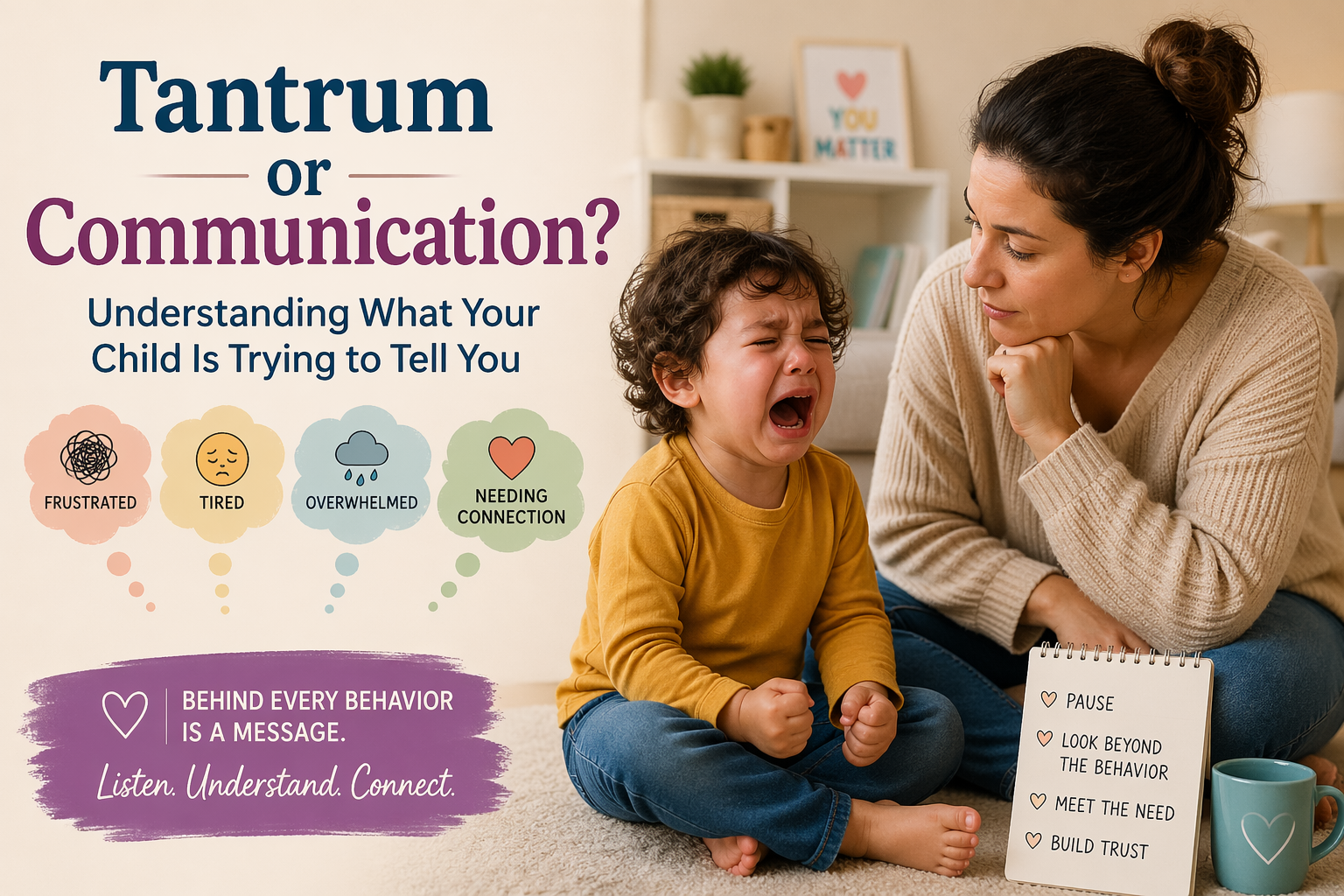
If you’re parenting a young child with autism, you’ve likely faced moments that feel overwhelming, crying, dropping to the floor, refusing to move, or reacting intensely to what seems like a small situation.
In those moments, it’s easy to wonder,
Is this a tantrum, or is something else going on?
The answer is often more complex, and more hopeful, than it seems.
All young children communicate through behavior. But for children with autism, especially those with limited verbal skills, behavior often becomes their primary way of expressing needs, wants, and feelings.
What may look like a tantrum is often your child’s way of saying:
When we begin to view behavior as communication, we shift from reacting to decoding.
Here’s the key,
Most behaviors that look like tantrums are still rooted in a purpose.
That purpose usually falls into one of two categories:
Trying to get something:
Trying to avoid something:
This doesn’t mean your child is being “manipulative.” Young children, especially those with autism, typically don’t have the ability to plan or control behavior in that way.
Instead, they repeat behaviors that work.
While every child is different, behavior is more likely tied to a real need when:
Sometimes, a behavior continues because it has been unintentionally reinforced.
For example:
Over time, your child learns, this works.
That doesn’t make it intentional manipulation, it means your child has discovered a reliable way to communicate and meet their needs.
Understanding the “why” behind behavior helps you respond more effectively.
1. Stay calm and observe
Look at what happened right before the behavior. That’s often your biggest clue.
2. Acknowledge the feeling
Even if you can’t give your child what they want, you can validate their experience.
3. Avoid reinforcing the behavior, when possible
If the behavior is aimed at escaping or gaining something, try not to let the behavior be the thing that works.
4. Offer a better way to communicate
This is the most important step. Teach what to do instead:
It’s important to remember,
You’re not just trying to stop a behavior, you’re helping your child replace it with something more effective.
That takes consistency, patience, and support.
Over time, as your child builds communication skills, many of these behaviors naturally decrease, because they’re no longer needed.
Therapies like ABA focus on understanding the function behind behavior and teaching meaningful alternatives.
This might include:
When children have a clear, reliable way to express themselves, everything begins to shift.
The next time your child has a big reaction, try asking:
“What are they trying to tell me?”
That question alone can change how you respond, and how your child experiences the moment.
Because behind every behavior, there’s a message.
And when we learn to listen, we give our children something powerful,
the ability to be understood.