Helping Young Children With Autism Express Affection in Their Own Way
Expessing Affection
ABA Therapy
Autism 101
Emotions
Family
Parenting

February is often filled with messages about love and affection. For parents of children with autism, this can sometimes bring up questions or concerns. Why doesn’t my child hug? Why don’t they say “I love you”?
The truth is, affection looks different for every child, and that’s okay.
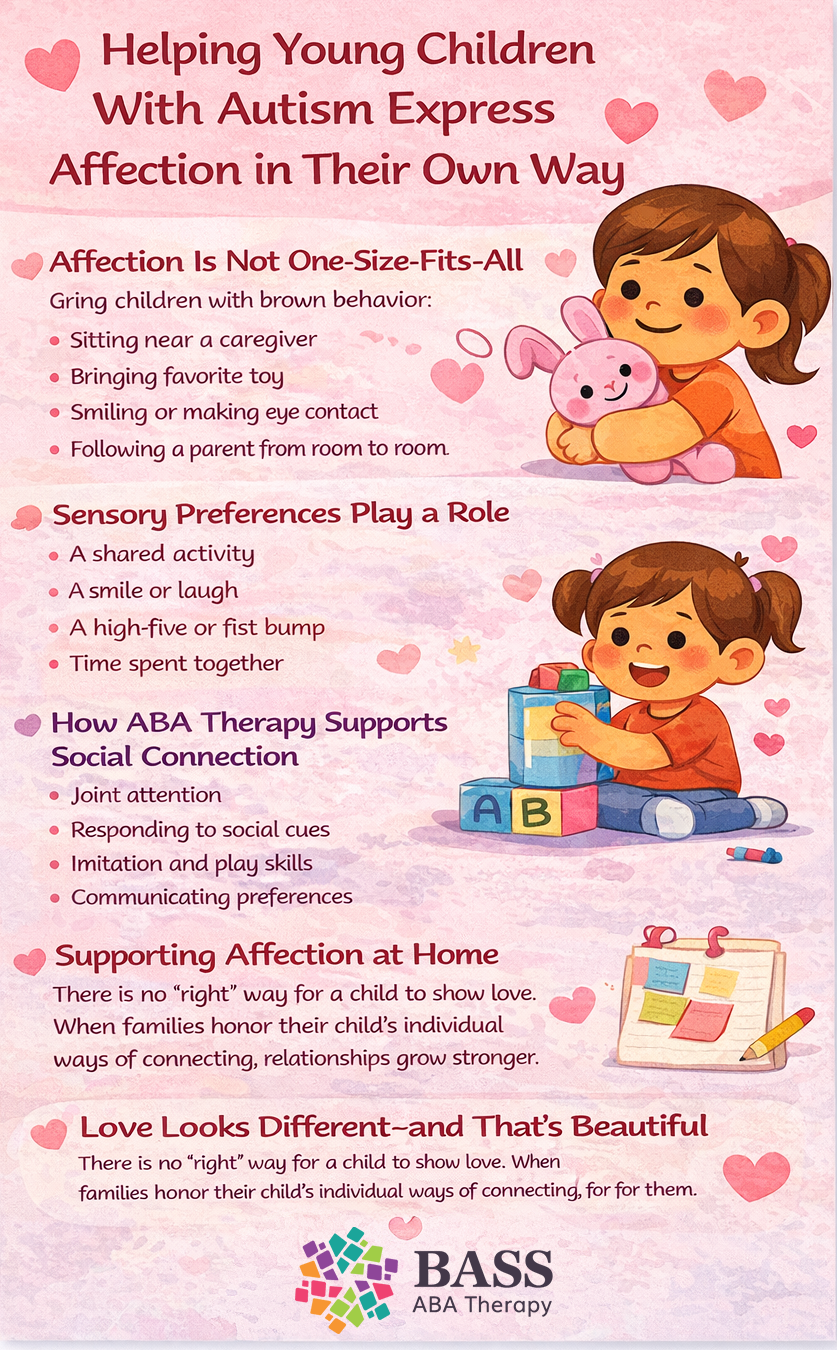
Young children with autism may show connection in ways that aren’t always recognized as affection. This might include:
These are meaningful expressions of connection.
Some children avoid hugs or physical touch due to sensory sensitivities—not lack of love. Respecting these boundaries helps children feel safe and builds trust.
Affection can be:
ABA therapy helps children build social and communication skills in ways that feel comfortable for them. Therapists may work on:
The goal isn’t to force affection, but to support meaningful connection.
Parents can:
Connection grows when children feel understood.
There is no “right” way for a child to show love. When families honor their child’s individual ways of connecting, relationships grow stronger.